Learn about perfume
How perfume is built—and how to read it
Discover how a fragrance evolves, how accords and notes shape what you smell, and how ingredients, families, and concentration fit together.
From perfume to its materials
-
1 · Evolution
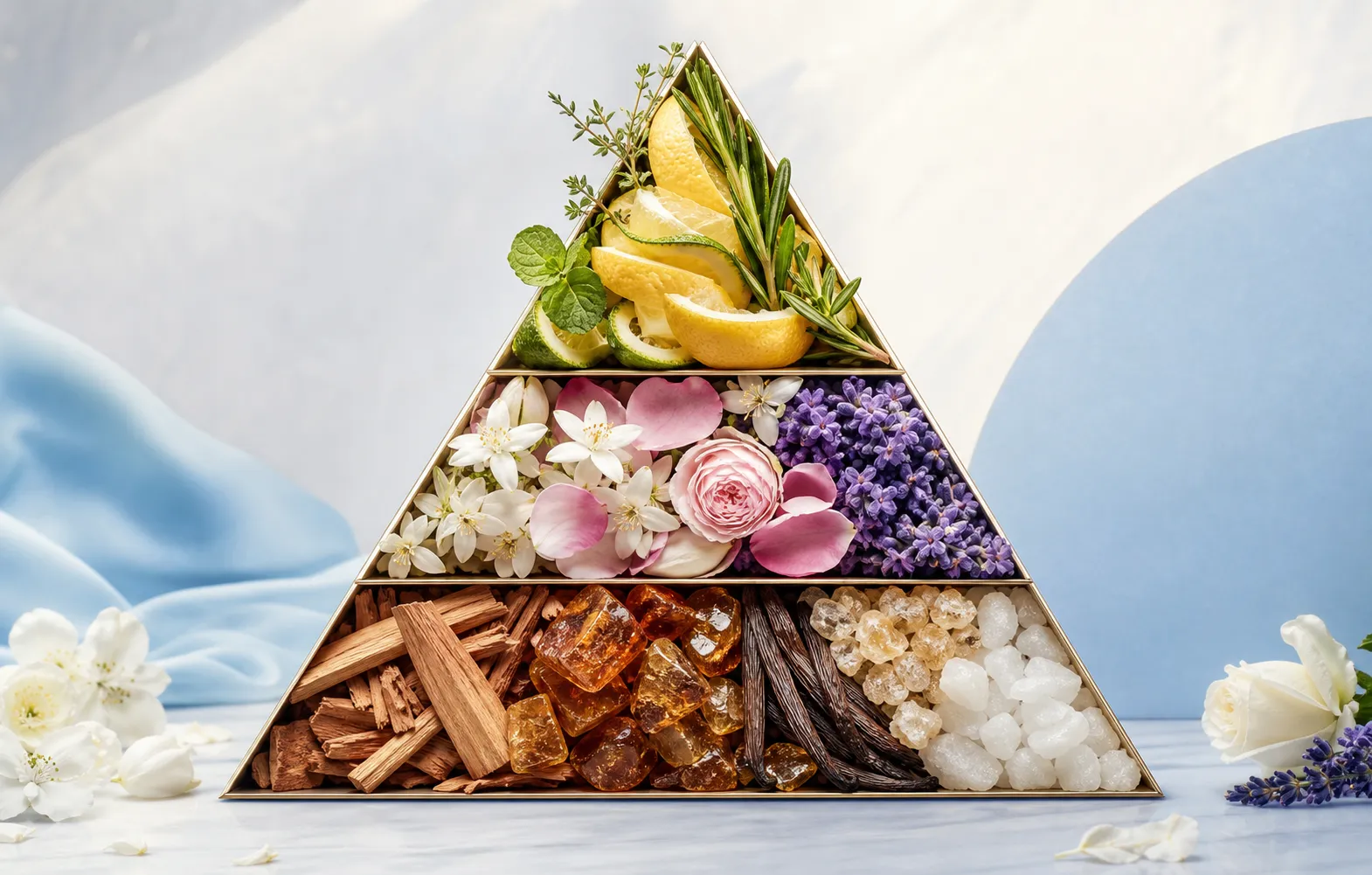
Top, heart, and base
Read the pyramid as a sequence: top notes appear first, heart notes reveal the fragrance's character, and base notes linger on skin.
Bright bergamot can give way to florals, then settle into woods or musks.
Understand the pyramid -

2 · Impression
Accords create recognizable impressions
An accord brings several materials together to suggest a recognizable impression, such as leather, amber, clean linen, or a gourmand effect. You may notice different accords as the fragrance develops.
An amber accord might blend vanilla, resins, and warm woods.
Explore accords -
3 · Language
Notes describe what we perceive
Notes name what you perceive. They help you describe a fragrance, follow its development, and compare it with others.
You can perceive notes of leather, rain, or cotton without those things being literal ingredients.
Learn to read notes -
4 · Construction
Perfumers build those notes from ingredients
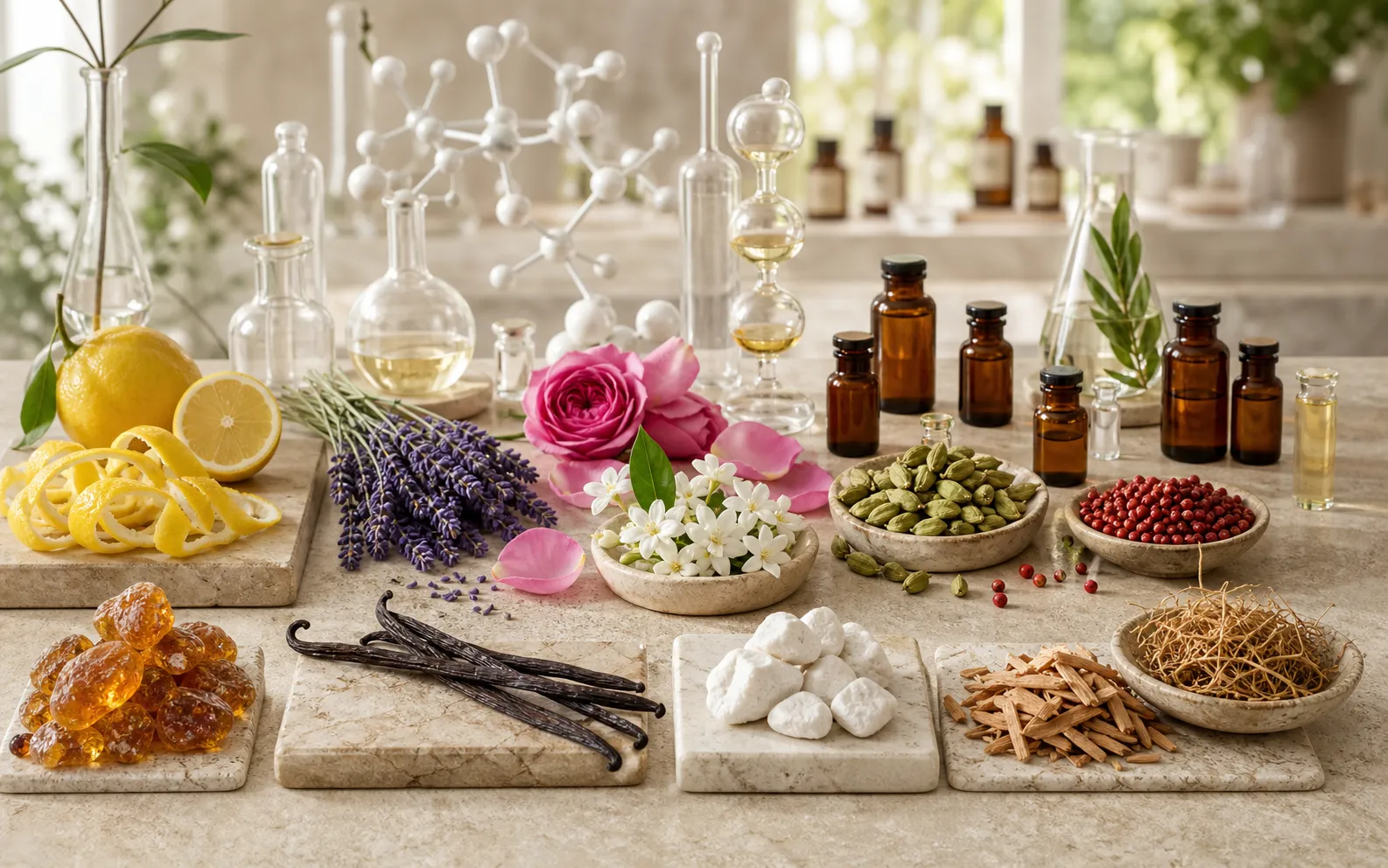
Natural raw materials and aroma molecules are measured and blended by perfumers to create notes and accords. A note does not necessarily come from a single ingredient.
Several molecules, resins, and smoky facets can work together to create a leather impression.
Understand ingredients
Two complementary maps
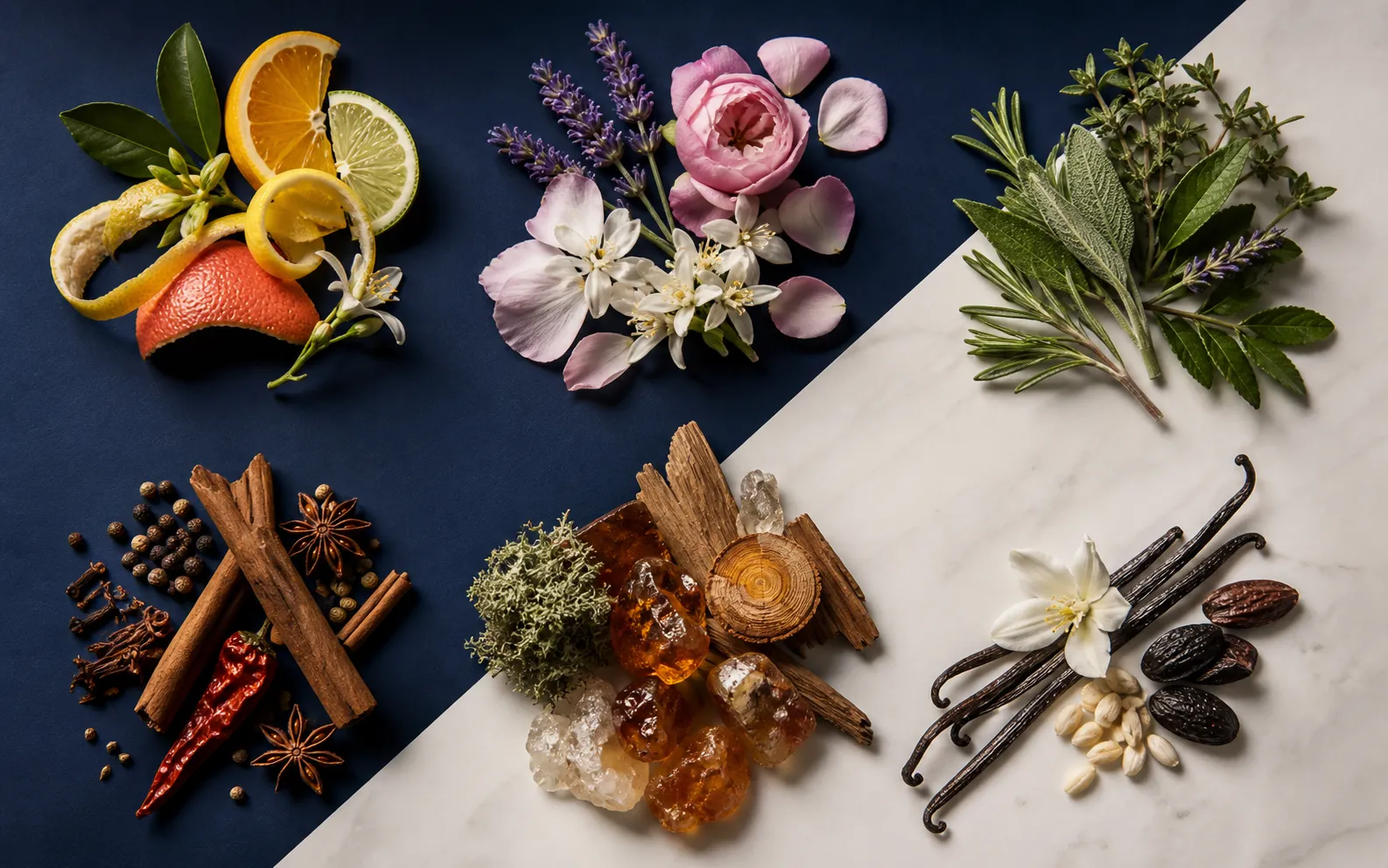
Classification
Fragrance families summarize a fragrance’s dominant character
Use families such as citrus, floral, woody, and amber to identify a fragrance's dominant character and compare styles. One perfume can span several families.
A fragrance may have a floral heart and a woody base.
See fragrance families
Format
Concentration is a guide, not a guarantee
Concentration can affect intensity, projection, and longevity, but the percentage alone does not tell the whole story. The formula, your skin, and the weather all matter.
An extrait may last for hours while projecting less than a bright Eau de Toilette.
Compare concentrationsA simple order for getting started
Start with the pyramid, then move through accords and notes before exploring how perfumers work with ingredients. Use families to compare styles and concentration to understand how a fragrance may project and last. Then put the framework into practice with real perfumes.
See these ideas in practice