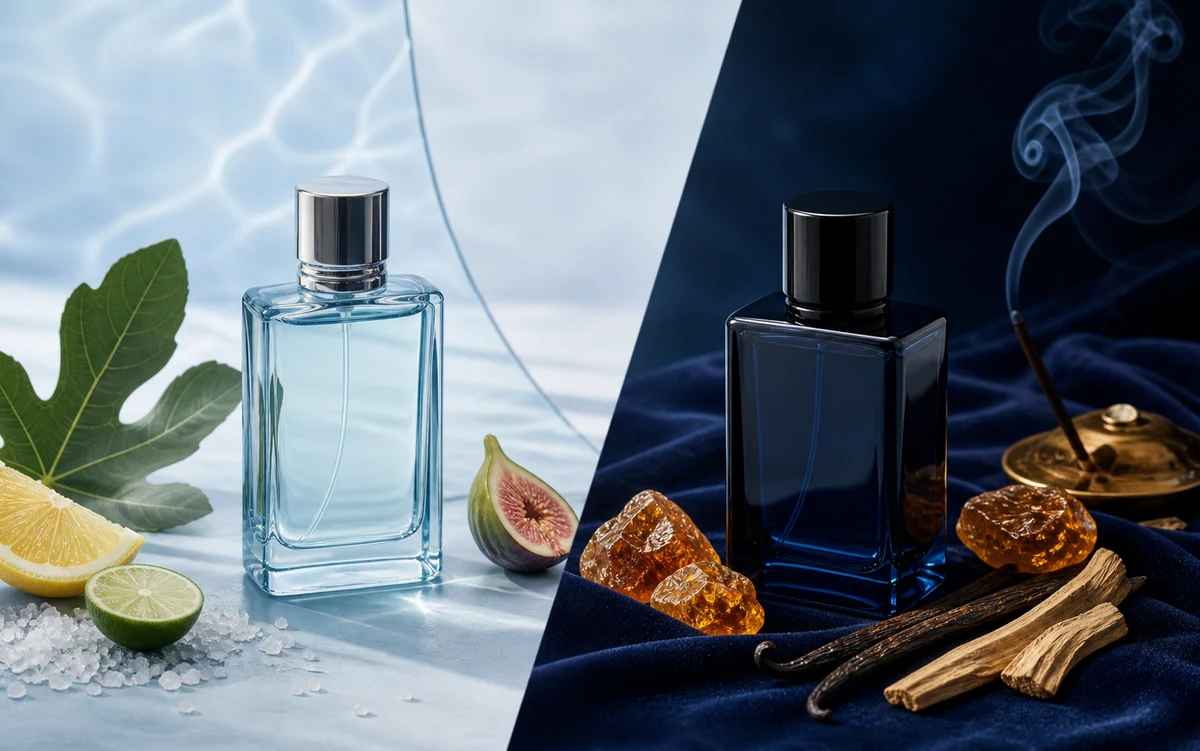
Autumn is the undisputed favorite season of perfumers and fragrance enthusiasts alike. After months of summer heat where ultra-light citrus colognes and marine waters rule out of necessity, dropping temperatures unlock an unparalleled olfactory spectrum.
Between 12°C and 20°C (54°F to 68°F), the air gains a clean density and moderate humidity that allow multifaceted compositions to unfold gradually, without vanishing in thirty minutes or stalling on cold skin.
In this guide, we break down the sensory physics of transitional weather, the four olfactory pillars of fall, how to tailor your scent to specific microclimates, and expert techniques for diffusing fragrance through layered clothing.
1. The Transitional Temperature Window: The Science of Balance
Fragrance evaporation behaves distinctively during autumn:
- End of thermal overdrive: In summer, body heat and high ambient temperatures cause volatile top notes (bergamot, lemon, aquatic chords) to dissipate rapidly. Autumn slows evaporation, allowing wearers to enjoy heart notes for hours.
- Free from winter cold suppression: In deep winter (<5°C / 40°F), heavy molecules lack kinetic energy to project effectively. Autumn offers just enough warmth for resins, woods, and spices to project steadily at conversation distance.
- The pitfall of jumping straight to heavy gourmands: A common mistake is leaping directly from fresh summer colognes to syrupy winter ouds or cloying vanilla bombs. On an 18°C sunny October afternoon, an overly dense fragrance quickly becomes suffocating. Autumn calls for texture and structural balance, not raw heaviness.
2. The 4 Olfactory Pillars of Autumn
The finest autumn scents are celebrated not for overwhelming power, but for their tactile, comforting depth. Here are the four signature accords:
I. Transitional Spices (Cool-Warm Balances)
Unlike intense, fiery winter spices (harsh cloves or heavy sweet cinnamon), autumn relies on vibrant spices blending crispness with warmth:
- Green Cardamom: Citrusy, minty, and aromatic upon spray, drying down into smooth warmth.
- Pink Pepper & Nutmeg: Deliver dry, refined radiance that elevates underlying wood structures.
- Catalog Spotlight: Parfums de Marly Layton harnesses crisp apple, lavender, and cardamom over noble woods for unmatched versatility.
II. Dry, Earthy Woods
The aroma of fallen foliage, damp bark, and mineral soil characterizes the autumn landscape:
- Vetiver: An earthy, smoky, slightly bitter root offering timeless sophistication without sweetness.
- Cedarwood & Sandalwood: Cedar provides sharp, pencil-shaving freshness, while sandalwood envelops the skin in creamy warmth.
- Catalog Spotlight: Terre d’Hermès pairs bitter orange, flint mineral accents, and vetiver, perfectly suited for crisp, clear October mornings.
III. Comforting Transitional Accords
Notes that evoke cozy shelter and relaxed afternoons:
- Black Tea & Blond Tobacco Leaf: Aromatic, dry, mature, and undeniably elegant.
- Ripe Fig: Summer fruitiness balanced with earthy wood facets and green leaves.
- Catalog Spotlight: Maison Margiela Jazz Club captures the warmth of sheltered spaces with blond tobacco leaf, rum, and subtle vanilla.
IV. Soft Leather & Suede
Autumn leather is not the harsh, tarry birch leather of winter, but supple, velvety suede that harmonizes with jackets and wool sweaters.
- Catalog Spotlight: Le Labo Santal 33 balances creamy sandalwood with clean leather and powdery violet.
3. Autumn Microclimates Matrix
Autumn is rarely uniform: golden sunny afternoons alternate with chilly mornings and rain-soaked days. Use this matrix to match your fragrance to daily conditions:
| Scenario / Microclimate | Thermal Profile | Recommended Olfactory Direction | Benchmark Fragrance |
|---|---|---|---|
| Golden Sunny Afternoons (18°C–22°C) | Mild, clear skies, crisp breeze. | Woody citrus, earthy chypre, dry orange. | Terre d’Hermès |
| Rainy, Damp Foliage Days (12°C–16°C) | Wet pavement, high humidity, fallen leaves. | Creamy sandalwood, cardamom, clean suede. | Le Labo Santal 33 |
| Office & Professional Workspaces (Indoor climate) | Enclosed spaces, close-quarter meetings. | Crisp apple, spiced lavender, noble woods. | Parfums de Marly Layton |
| Chilly Evenings & Outdoor Dining (<12°C) | Early cold, wind, coat weather. | Blond tobacco leaf, amber rum, dry vanilla. | Maison Margiela Jazz Club |
| Special Weekend Gatherings | Leisure walks, dinners, social events. | Golden honey, sweet tobacco, cinnamon, lavender. | Xerjoff Naxos |
4. Layering Scent Across Seasonal Fabrics
As temperatures drop, clothing transitions to textured natural fibers (flannel shirts, merino wool sweaters, tweed, and suede jackets). This shifts how fragrance projects:
- Dual-Application Technique (Skin + Fabric):
- On Skin (Pulse Points): Apply to the sides of the neck and wrists. Body heat gently drives the evolution of the note pyramid.
- On Natural Fabrics: Apply 1 or 2 sprays to your scarf, jacket lapel, or wool cardigan. Natural fibers hold heart and base notes for days without distortion, releasing a subtle scent trail whenever you move.
- Caution with Synthetics: Avoid spraying delicate silks or polyester up close to prevent staining from fragrance oils.
- Managing Daily Temperature Swings: If mornings begin at 10°C but afternoons reach 20°C, dose for the afternoon peak: 3 sprays of a woody or spiced fragrance are typically ideal for the entire day.
5. Summary & Editorial Verdict
Autumn rewards nuance, tactile warmth, and textural complexity. It is the ideal season to embrace woody, spiced, and amber-tinged fragrances without succumbing to overwhelming sweetness.
Choose scents that envelop you comfortably without smothering the room, and enjoy the most sophisticated season on the fragrance calendar.