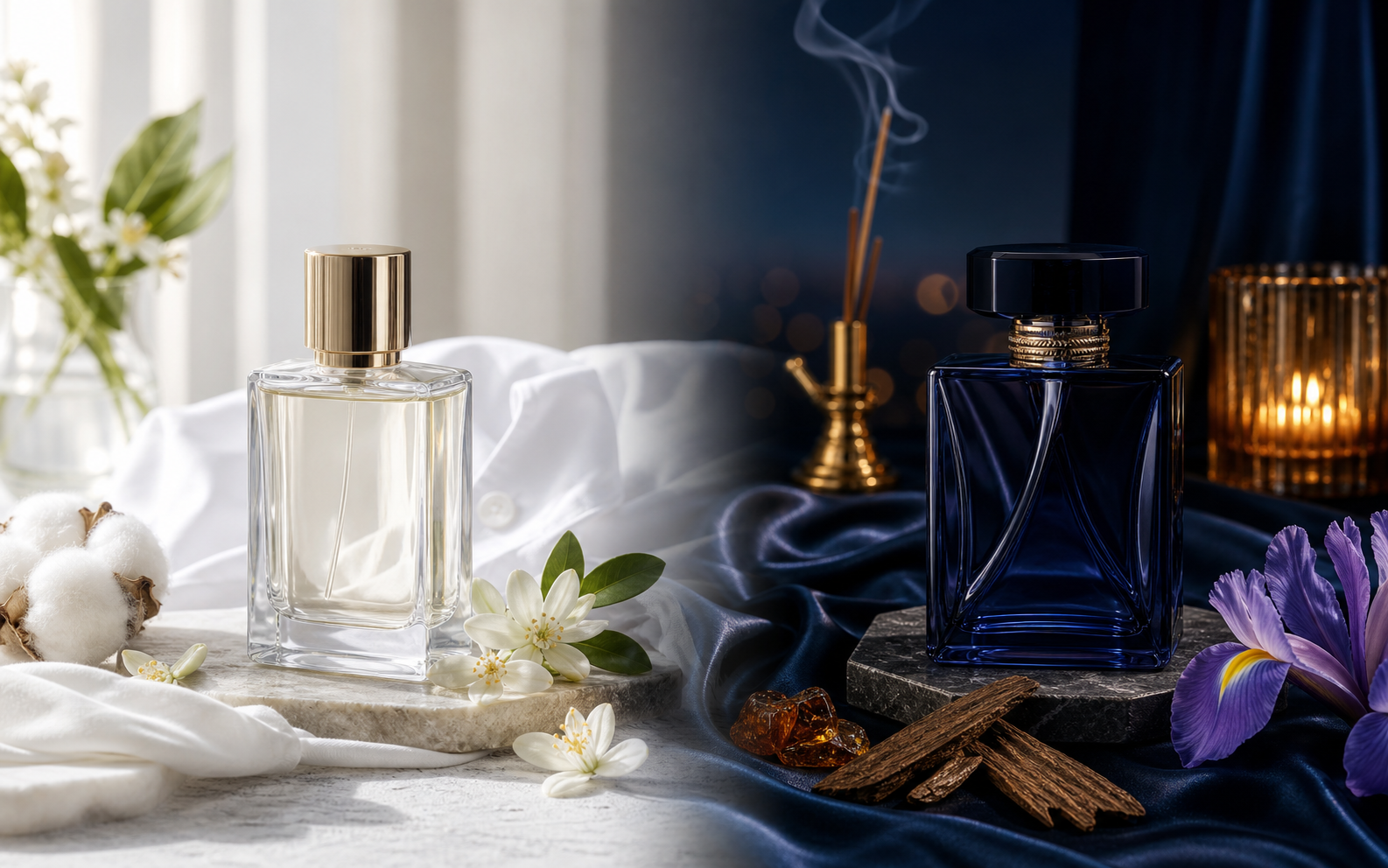
Choosing a perfume goes far beyond falling in love with a paper blotter in a store. Fragrance is applied chemistry in real time: a dynamic interaction between the aromatic ingredients in the bottle and the external factors governing their evaporation. Understanding how your skin, ambient temperature, and social setting interact with fragrance is the key to building a versatile and effective perfume wardrobe.
In this guide, we break down the three fundamental pillars that shape a perfume’s evolution and how to apply them in daily life to avoid blind buys and performance disappointment.
1. Skin changes evolution, not identity
There is a widespread myth that skin “magically alters” a perfume until it becomes unrecognizable. The scientific reality is more precise: skin acts as a thermal and hydric diffuser. Factors such as stratum corneum lipid levels, skin hydration, and body temperature directly influence the rate at which aromatic molecules evaporate.
- Dry or dehydrated skin: Essential oils and synthetic fixatives bind less effectively to dry epidermis. Fragrance tends to evaporate faster, projecting strongly in the first few minutes but losing longevity in the base notes. Applying an unscented moisturizer or neutral petrolatum to pulse points before spraying helps retain fragrance molecules.
- Combination or oily skin: Natural surface lipids help bind heavier molecules (such as woods, resins, musks, and vanilla). Fragrance usually lasts longer and the drydown is more gradual and warm.
- Skin temperature: Pulse points (wrists, neck, behind the ears, and inner elbows) concentrate greater superficial blood flow. Body heat accelerates the release of top notes (citrus and greens), while less exposed areas allow for a more measured progression.
For this reason, never evaluate a perfume solely on someone else’s skin or on a paper blotter: always test on your own skin and observe its development over at least three to four hours.
2. Heat amplifies; cold contains
Climate serves as the thermal regulator of fragrance performance. Warm air and humidity increase the vapor pressure of aromatic compounds, causing them to project more intensely and rapidly.
In summer and warm climates
Heavy notes (dense ambers, sweet gourmands, bold ouds) can become stifling and overwhelm those around you. Conversely, citrus, aquatic, green, and transparent floral families excel due to their crispness and clarity. Lower aromatic density prevents heaviness on humid days.
In winter and cold climates
Low temperatures slow down evaporation. Light citrus and volatile musks can fade into background noise within minutes. This is the ideal season to wear structured, rich notes: cedarwood, sandalwood, warm spices (cardamom, cinnamon, pepper), tobacco, leather, and oriental accords.
Matching fragrance families to climate is not a rigid rule, but a matter of physical balance: heat amplifies projection, whereas cold compresses it.
3. Occasion determines dose and trail
Every social and professional setting calls for a different level of projection or trail (sillage). A perfume that shines on a night out may prove intrusive during a workplace meeting in an enclosed room.
- Office and professional settings: Discretion is paramount. Clean profiles, soapy facets, restrained iris, aromatic teas, or dry woods applied with 2 to 3 sprays are sufficient. Your personal fragrance bubble should not extend beyond arm’s length.
- Casual daily wear: Versatile and comfortable profiles (aromatic citrus, moderate florals, light woods) that allow easy reapplication throughout the day without clutter.
- Dates and social events: Short distances and tactile interest are key. Soft ambers, balanced vanilla, fine spices, or skin musks invite closeness.
- Night out and celebrations: The perfect opportunity to project. Sillage can be prominent, and bold accords (rum, tobacco, resins, leather, rich gourmands) hold up well in crowded venues.
Adjusting your spray count and application technique (clothing vs. skin) lets you adapt the same fragrance to different contexts.
4. Test before deciding
To avoid accumulating unused bottles on your vanity, follow a structured testing approach:
- Paper blotter test: Useful only as an initial quick filter to see if the overall style appeals to you.
- First skin test (1 spray): Apply to your wrist or forearm. Do not rub your wrists together; rubbing creates thermal friction that disrupts top note structure.
- Phase evaluation: Note top notes (0–15 min), heart notes (30 min – 2 hours), and base drydown (3–6 hours).
- Multi-day wear test via decant or sample: Use a 2 ml sample over several consecutive days in your normal routine (work, rest, real weather) before purchasing a full bottle.
5. Turn preferences into a shortlist
Once you have identified your aroma, season, and budget preferences, the next step is narrowing down options without feeling overwhelmed.
To discover alternatives tailored to your exact wearing occasion and budget, explore our Perfume buying guide where we break down collection stages step by step.
If you prefer a quick diagnosis tailored to our editorial catalog in just one minute, try our 5-question Perfume Recommender with no sign-up required.