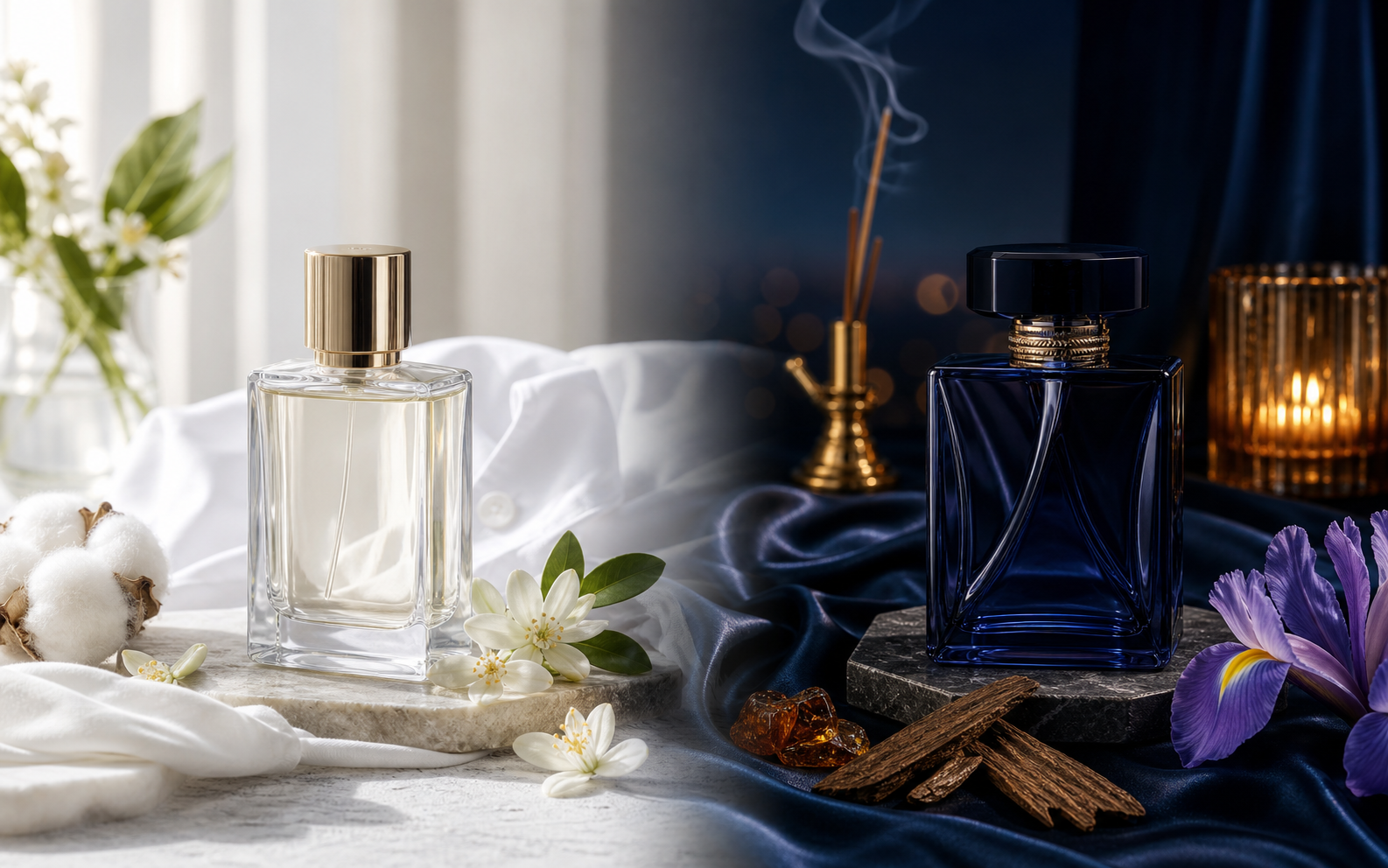
Buying a quality fragrance is only the first step. How you store your bottles at home and how you apply them to your body account for more than 50% of real-world performance, scent fidelity, and lasting power throughout the day.
A poorly stored perfume can oxidize and lose its delicate top notes in less than a year. Conversely, a disciplined application technique can double the presence of a subtle scent without spraying half the bottle.
This guide covers the science of bottle storage, the truth about maceration, strategic pulse point placement, and the rules of fragrance layering.
1. The Three Enemies of Perfume: Light, Heat, and Oxygen
Fragrance is a complex solution of natural essential oils, synthetic aroma molecules, distilled water, and denatured alcohol. This formulation is chemically sensitive to three main environmental factors:
1. Ultraviolet Radiation (Direct Sunlight)
UV photons break down the molecular bonds of light, delicate aroma compounds (such as citrus esters, aldehydes, and terpenes). The result is a fragrance with a flat, sour, or metallic opening.
- Rule: Store your perfumes inside their original boxes or in a closed wardrobe away from direct natural light.
2. Thermal Fluctuations (The Bathroom Mistake)
The bathroom is the worst place to keep your perfume collection. Daily hot showers cause rapid spikes in temperature and humidity that accelerate hydrolytic degradation of fragrance oils.
- Rule: Keep your bottles in a cool, dry room (bedroom or closet), ideally between 16°C and 22°C (60°F–72°F).
3. Oxygen and Headspace
Every time you spray, a small amount of air enters the bottle. Free oxygen reacts slowly with reactive raw materials.
- Rule: Ensure the bottle cap is firmly seated after each use to minimize air exchange.
2. Maceration and Aging: Myths and Facts
Fragrance enthusiasts frequently debate bottle “maceration.” Here is the real chemistry behind the term:
- Factory Maturation: In the laboratory, fragrance concentrate is blended with alcohol and allowed to rest for several weeks before bottling so that aromatic compounds reach chemical equilibrium.
- Evolution After First Spray: When you unbox a new bottle and spray it 5 to 10 times, you introduce fresh oxygen into the headspace. In perfumes containing natural resins, woods, or vanilla, this initial contact rounds off harsh edges and enhances depth over 4 to 8 weeks.
- The Refrigerator Myth: Storing standard fragrances in a kitchen fridge does not improve longevity and subjects essential oils to thermal shock every time you take them out. The only exception is pure citrus decants during extreme heatwaves (>38°C / 100°F) in uncooled homes.
3. Pulse Points vs. Fabric: Where and How to Apply
Skin and textiles interact with fragrance in completely different ways. Mastering both surfaces gives you full control over sillage and longevity.
+-------------------------------------------------------------------------+
|                  COMPARISON: SKIN VS. TEXTILE FABRIC                    |
+----------------------+--------------------------------------------------+
| Skin Application     | - Body warmth projects the aroma outward.        |
| (Pulse points)       | - Allows full three-stage pyramid evolution.     |
|                      | - Typical longevity: 4 - 10 hours.               |
+----------------------+--------------------------------------------------+
| Fabric Application   | - Cold fibers retain drydown molecules.          |
| (Cotton, wool)       | - Slower, linear projection with less heat.      |
|                      | - Extended longevity: 12 - 48 hours.             |
+----------------------+--------------------------------------------------+
Strategic Pulse Points
Apply where blood vessels run close to the skin surface to deliver continuous warmth:
- Sides of the neck and nape: Projects naturally within conversation distance and leaves a sillage trail without overwhelming your own nose.
- Behind the ears: A sheltered spot ideal for intimate encounters.
- Forearms and wrists: Allows you to track scent development over the day. Critical rule: never rub your wrists together; friction generates excess heat that crushes delicate top notes.
The Role of Skin Moisture
Dry skin absorbs carrier alcohol and dissipates perfume oils rapidly. Applying an unscented moisturizer or light petroleum jelly before spraying creates a lipid barrier that can extend wear time by 2 to 4 hours.
4. Principles of Fragrance Layering
Layering involves combining two or more fragrances to create a personalized olfactory signature. Follow these three core principles to layer cleanly:
Principle 1: Molecular Weight Hierarchy
Always apply the heaviest, densest fragrance first (woody, amber, leather, or musk bases), followed by the lighter, volatile scent on top (citrus, fresh florals, aromatic herbs). Reversing this order will cause the heavy base to suffocate the lighter notes.
Principle 2: The Common Thread
Combine fragrances that share at least one harmonious accord or complementary note. For instance, a versatile bergamot-and-vetiver composition like Bleu de Chanel pairs naturally with a dry cedarwood or clean white musk base.
Principle 3: Spray Budgeting
Layering does not mean doubling your spray count. If your normal dose is 4 sprays, apply 2 sprays of the base fragrance and 2 sprays of the top layer.
+-------------------------------------------------------------------------+
|                    RECOMMENDED LAYERING COMBINATIONS                    |
+-------------------------+-------------------------+---------------------+
| Base Layer (Heavy)      | Top Layer (Light)       | Olfactory Result    |
+-------------------------+-------------------------+---------------------+
| Vanilla / Amber         | Citrus / Neroli         | Gourmand freshness  |
| Cedar / Vetiver         | Green fig / Cardamom    | Crisp sophistication|
| Clean white musk        | Fresh rose / Jasmine    | Luxury soap aura    |
| Soft leather / Resins   | Bergamot / Black pepper | Dynamic contrast    |
+-------------------------+-------------------------+---------------------+
5. Practical Checklist
- Store bottles in a dark, dry, temperature-stable closet—never the bathroom.
- Moisturize skin before spraying to lock in aromatic oils.
- Target the sides of the neck and collarbone to prevent olfactory fatigue.
- Layer from heaviest molecular base to lightest top layer.
To understand the architecture behind individual notes and accords, explore our guide on perfumery ingredients and compare formulation strengths in our fragrance concentration guide.