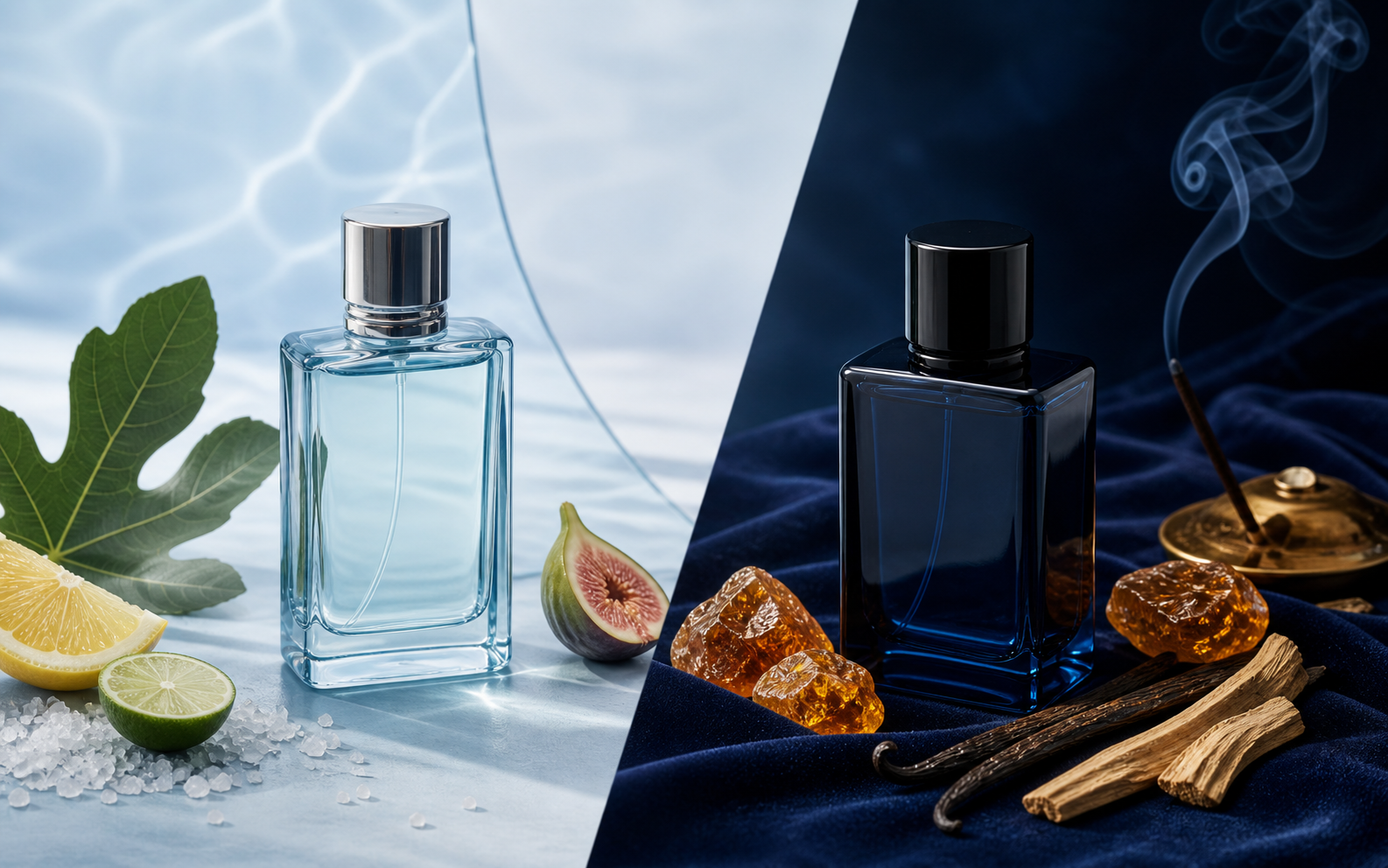
Have you ever noticed that your favorite fragrance smells vibrant and projecting in mid-summer, yet barely registers on a crisp winter morning? Or that a warm, comforting vanilla scent feels stifling and cloying on a humid August afternoon?
A perfume’s performance does not depend solely on concentration percentage or oil quality. The thermodynamic variables of your immediate environment—ambient temperature, relative humidity, and skin surface heat—dictate how quickly aromatic molecules vaporize and project into the surrounding air.
This article explores the physics of fragrance evaporation and provides a practical framework for choosing the right scent profile based on the thermometer.
1. The Thermodynamics of Fragrance Evaporation
Perfume projects because liquid fragrance molecules absorb thermal energy, convert into vapor, and travel through the air to your olfactory receptors. The speed of this process is governed by vapor pressure:
- Higher Temperatures (Heat): Aromatic molecules gain kinetic energy. Volatile top notes (such as bergamot, lemon, or mandarin) explode with immediate projection but evaporate within 15 to 30 minutes.
- Lower Temperatures (Cold): Kinetic energy drops. Dense base notes (such as amber, vanilla, and heavy woods) remain tethered to the skin, significantly reducing their projection radius (sillage).
A light citrus perfume does not necessarily “disappear” in winter—it simply lacks the ambient thermal energy required to lift off your skin.
2. Dry Heat vs. Humid Heat
Not all hot days behave the same way with fragrance. Atmospheric moisture fundamentally shifts how scents develop:
+-------------------------------------------------------------------------+
|                    THE IMPACT OF HUMIDITY ON PERFUME                    |
+----------------------+--------------------------------------------------+
| Dry Heat             | - Clean, rapid evaporation rate.                 |
| (Desert, inland      | - Citrus and herbal notes radiate crisply.       |
| continental summer)  | - Requires fabric application or reapplication.  |
+----------------------+--------------------------------------------------+
| Humid Heat           | - Saturated air traps heavy base molecules.      |
| (Coastal, tropical   | - Sweet or gourmand notes become suffocating.    |
| environments)        | - Prioritize saline, aquatic, and mineral notes. |
+----------------------+--------------------------------------------------+
In humid environments, heavy molecules (like ethyl maltol, resins, and vanillin) get trapped in the moisture layer above the skin, creating an overbearing, sticky impression (cloying effect). In these settings, crisp aquatic, mineral, and citrus profiles like Acqua di Giò Profondo or Torino21 provide a cooling, refreshing presence.
3. Winter Cold and Molecular Density
During late autumn and winter, colder temperatures decrease perspiration and constrict skin pores. For a fragrance to cut through chilled air and remain noticeable through wool coats and scarves, it requires raw materials with high molecular weight:
- Warm Spices: Cinnamon, cardamom, nutmeg, and clove.
- Resins and Balsams: Benzoin, myrrh, labdanum, and opoponax.
- Dense Woods and Tobacco: Agarwood (oud), creamy sandalwood, and rich tobacco leaf.
Potent, spicy compositions like Spicebomb Extreme or Dior Sauvage Elixir are engineered with heavy base architecture specifically to project reliably through cold air.
4. Temperature Selection Matrix
Use this quick reference guide to match your daily weather with the ideal fragrance family:
+-------------------------------------------------------------------------+
|                  TEMPERATURE-BASED FRAGRANCE SELECTION                  |
+-------------------+-------------------------+---------------------------+
| Temperature Range | Recommended Families    | Key Notes to Look For     |
+-------------------+-------------------------+---------------------------+
| Extreme Heat      | Citrus, Aquatic,        | Grapefruit, neroli, mint, |
| (> 28°C / 82°F)   | Green / Aromatic        | sea salt, clean vetiver.  |
+-------------------+-------------------------+---------------------------+
| Warm Mild         | Modern Fougère,         | Lavender, green apple,    |
| (19°C - 27°C)     | Floral Chypre, Woody    | cedarwood, pink pepper.   |
+-------------------+-------------------------+---------------------------+
| Cool Mild         | Spicy Woody,            | Cardamom, creamy iris,    |
| (10°C - 18°C)     | Soft Amber / Oriental   | sandalwood, black tea.    |
+-------------------+-------------------------+---------------------------+
| Deep Cold         | Dense Amber, Gourmand,  | Dark vanilla, tobacco,    |
| (< 10°C / 50°F)   | Leather and Resins      | rum, tonka bean, resins.  |
+-------------------+-------------------------+---------------------------+
5. Practical Application Rules
- In summer: Cut your spray count in half before entering air-conditioned indoor spaces to avoid overwhelming colleagues.
- In winter: Spray your scarf or jacket lining; fabrics sustain sillage when skin surface temperature drops.
- During transition seasons: Opt for versatile transitional profiles like woody-citrus blends or modern aromatic fougères.
To explore all fragrance categories in depth, visit our olfactory families guide and check our curated recommendations in perfumes by season.