Notes / Evaporation / Trail
Perfume notes
A fragrance is best understood as a composition that unfolds over time: it starts with volátile notes, reveals its heart and ends in a base that remains on skin and fabric.
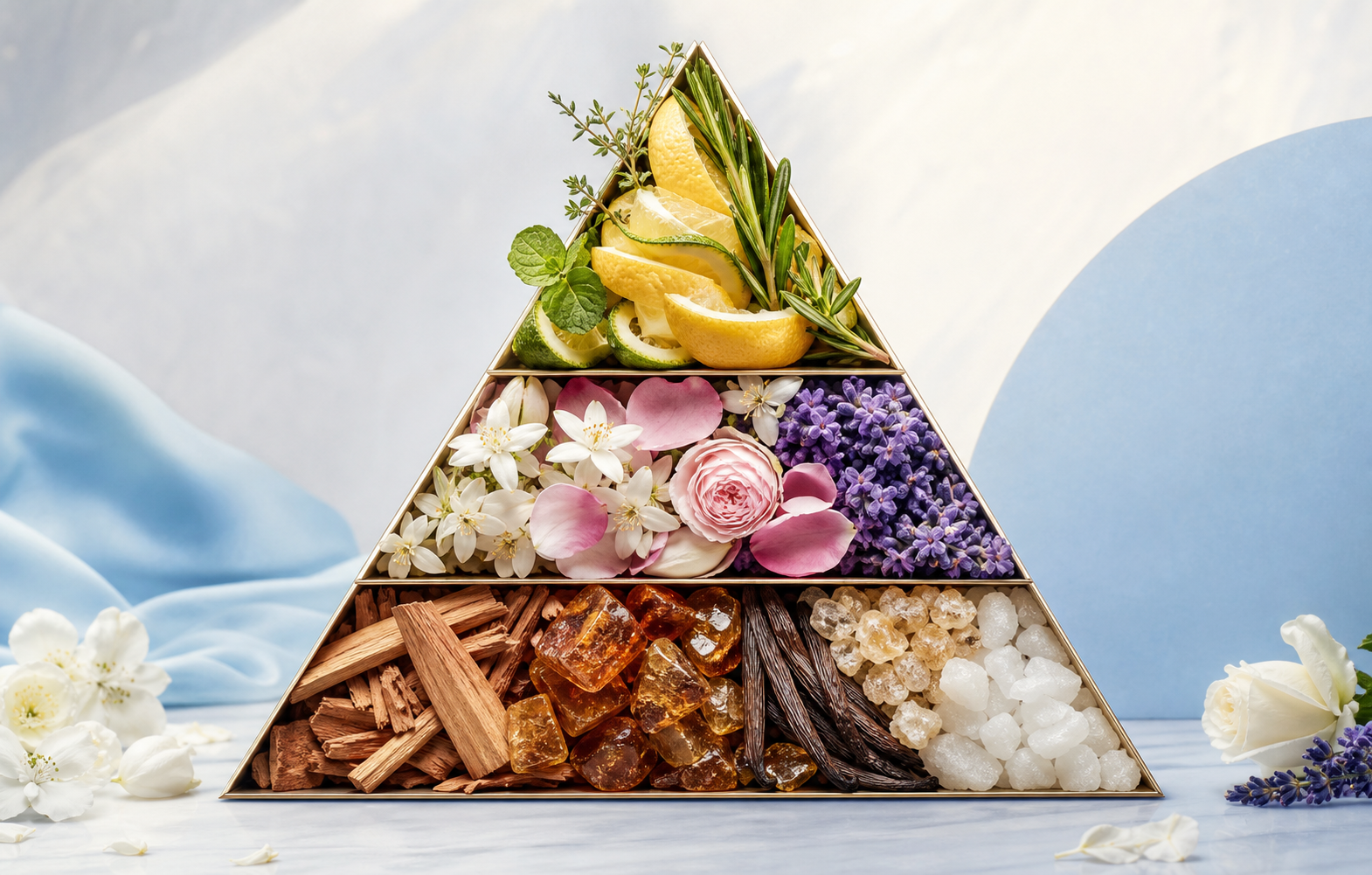
The first impression: citrus, herbs, light spices or aquatic notes that evaporate quickly.
The body of the fragrance: flowers, aromatics, fruits, soft spices and the main accords.
The memory of the perfume: woods, amber, vanilla, resins, musks and persistent materials.
The scent it leaves around you. Stronger does not always mean more elegant.
How to read a fragrance
The pyramid is a map, not an exact promise
Top notes usually shine during the first minutes. Then the heart appears, where the personality of the perfume is easier to recognize. The base lasts longer because it contains lower-volátility materials or materials with higher fixation.
On real skin, temperature, humidity, hydration, dose and body chemistry all matter. That is why it is worth testing a perfume for several hours before deciding.
Olfactory material
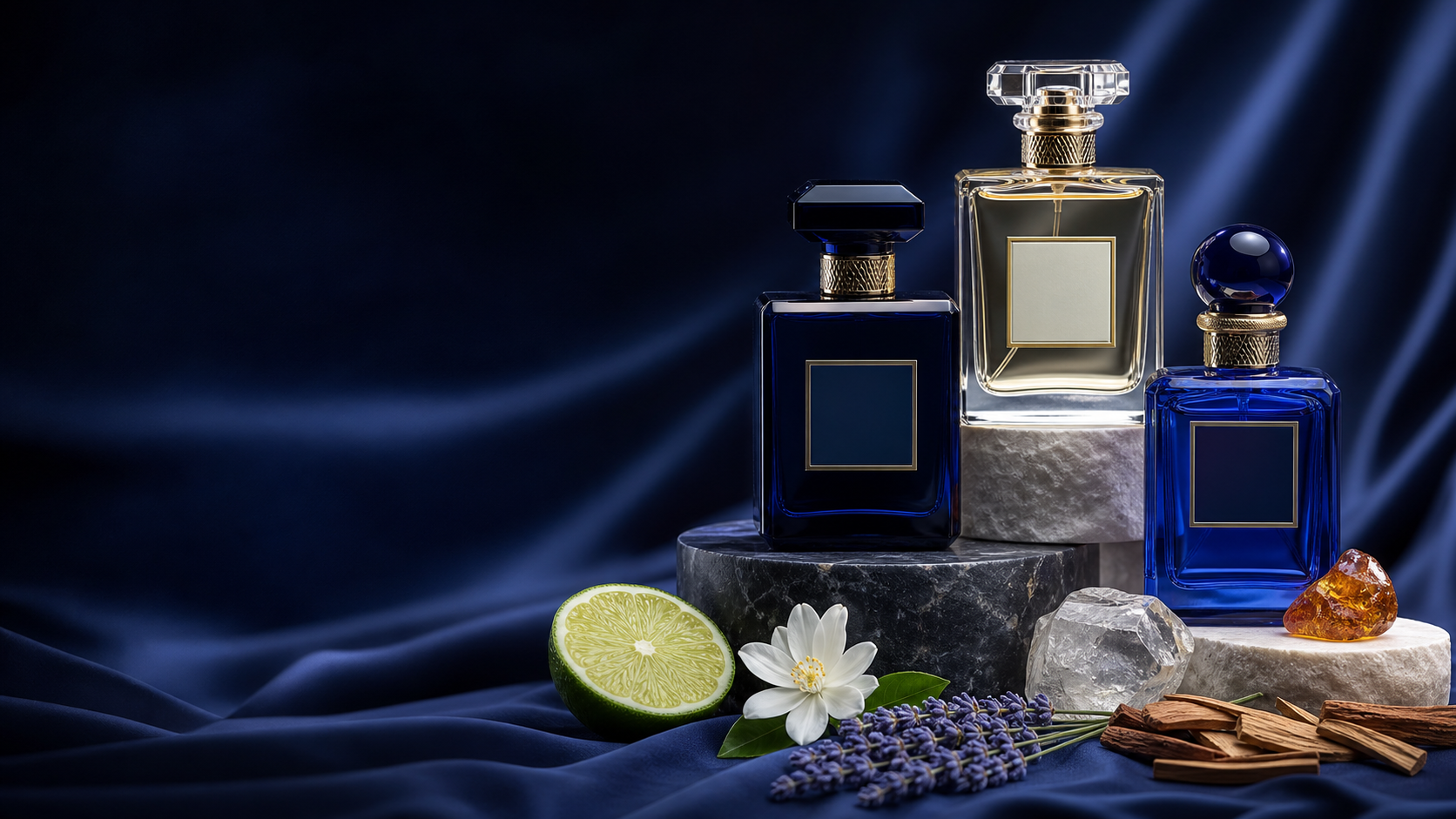
Common note groups
Citrus
Bergamot, lemon, grapefruit, mandarin. They add brightness, cleanliness and freshness.
Floral
Rose, jasmine, iris, neroli, lavender. They can be clean, creamy, powdery or sensual.
Aromatic
Sage, rosemary, thyme, lavender, mint. They add a green, herbal and polished feel.
Spicy
Cardamom, pepper, cinnamon, clove. They add contrast, warmth and texture.
Woody
Cedar, vetiver, sandalwood, oud. They add structure, dryness, depth and elegance.
Amber and balsamic
Benzoin, labdanum, vanilla, tonka, resins. They usually feel warm and enveloping.
Concrete examples
Perfumes for training each type of note
These suggestions work as olfactory reference points. They are not the only possible perfumes: they are recognizable examples for learning to detect families of materials.
Dior Sauvage Eau de Parfum
A good example of a spicy citrus opening over a denser base of vanilla and ambroxan.
Try it if you want to understand how citrus can feel clean, powerful and nocturnal at once.
Chanel N°5 Eau de Parfum
A classic aldehydic floral built around May rose, jasmine, citrus and vanilla.
Ideal for recognizing abstract flowers, not a literal florist rose or jasmine.
Terre d’Hermes Eau de Toilette
A reference for reading orange, pepper, vetiver, cedar and dry minerality.
Notice how it moves from bright citrus to earthy, elegant wood.
Byredo Blanche Eau de Parfum
Aldehydes, rose, sandalwood and musk in a clean, textile and íntimate reading.
Useful for separating a skin scent from a fragrance with a large trail.
Mugler Angel Eau de Parfum
A historic example of modern gourmand perfume with bergamot, praline, honey, vanilla and patchouli.
Try it lightly: the sweetness and patchouli have a strong presence.
Guerlain Shalimar Eau de Parfum
Bergamot, iris and vanilla in a classic and sensual amber structure.
Let it dry for several hours to understand the difference between opening and base.
Practical advice
Test on skin and wait for the drydown
A blotter helps compare quickly, but skin reveals diffusion, sweetness, texture and persistence. Apply lightly, do not rub, and smell again after 15 minutes, one hour and three hours.
Reference sources
Editorial summary based on perfumery, ingredient and safety guides.
- The Perfume Society - notes and fragrance families
- IFRA - fragrance ingredients and safety
- The Fragrance Foundation
- Fragrantica - Sauvage Eau de Parfum
- Fragrantica - Chanel N°5 Eau de Parfum
- Fragrantica - Shalimar Eau de Parfum
- Dior Sauvage Eau de Parfum
- CHANEL N°5 Eau de Parfum
- Guerlain Shalimar Eau de Parfum