Composition / Materials / Balance
Perfume accords
An accord is like an olfactory word: several materials combine to create a sensation the nose recognizes as clean, amber, leather, marine, green or gourmand.
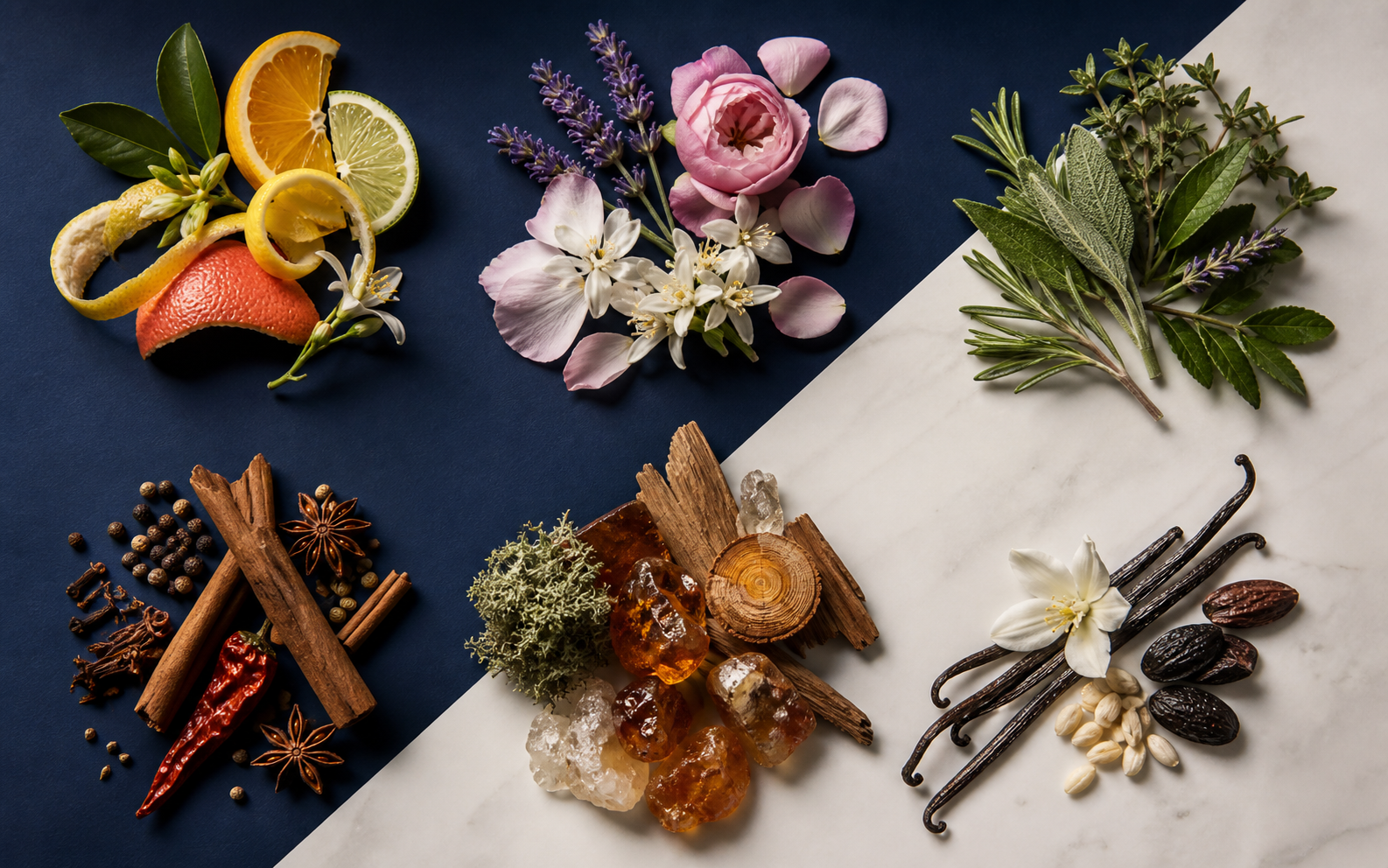
A combination of notes that creates a new and recognizable impression.
Fresh against warm, clean against dark, dry against sweet.
Base materials help support more volátile notes.
A good fórmula should not crush its opening or become flat in the base.
Useful accords
Combinations you will often find
Aromatic citrus
Bergamot, lemon, lavender and rosemary. Fresh, clean, sporty or modern barbershop.
Musky floral
Jasmine, rose, neroli and white musks. Polished, luminous and easy to wear.
Spiced woody
Cedar, vetiver, pepper, cardamom. Dry, elegant and versátile.
Amber vanilla
Benzoin, labdanum, vanilla, tonka. Warm, sweet and nocturnal.
Mineral aquatic
Marine, salty and transparent moss notes. Light, fresh and summery.
Leather iris
Iris, leather, woods and resins. Sophisticated, dry and present.
Concrete examples
Perfumes for recognizing accords
Fragrantica is used here as a community reference for checking main accords, perceived notes and usage context, alongside official brand information.
Dior Sauvage Eau de Parfum
Spiced bergamot with vanilla and a powerful clean trail.
Chanel N°5 Eau de Parfum
Aldehydes, rose and jasmine for studying an abstract floral.
Terre d’Hermes Eau de Toilette
Orange, pepper, cedar and vetiver with a dry mineral feel.
Jo Malone Wood Sage & Sea Salt
Ambrette, sea salt and sage with a coastal, light reading.
Mugler Angel Eau de Parfum
Praline, honey, vanilla and patchouli with a very distinctive sweet identity.
Tom Ford Oud Wood Eau de Parfum
Oud, cardamom, sandalwood and vetiver in a polished oud interpretation.
Baccarat Rouge 540 Eau de Parfum
Saffron, jasmine, cedar and mineral amber facets.
Yves Saint Laurent Libre Eau de Parfum
Lavender and orange blossom over musks and vanilla.